Conventions of a Thriller
Narrative
The aim of the thriller is to create suspense and excite the audience. It usually uses themes and crimes that many people in the world fear so they can relate to the innocent victims in the thriller and fear the antagonists more. We usually see the film in the perspective of either the protagonist or the antagonist which helps to build suspense for the audience.


Character
Typically in thrillers, the antagonist is very intelligent and one step ahead all of the time. They are usually very organised and are able to plot vicious crimes with ease and organisation so as not to be caught. This characteristic is significantly powerful in Thrillers because the audience sympathises with the protagonist and fears for them due to knowing how bad the antagonist is.
There is usually an extreme difference between the protagonists and antagonists. The protagonists are often shown as normal and innocent people going about their life as ordinary whilst the antagonist is polar opposite to this and is seen as extreme and abnormal to the audience. Whilst the antagonist is presented to the audience as abnormal in their behaviour, this character is sometimes presented to the other characters in the film as ordinary and one of the crowd. This can build suspense in the audience because as viewers we can see that the antagonist is evil and yet the protagonists are unaware and unsuspecting of this.
Characters are built up throughout the entire film, giving the audience a deeper and deeper perspective into the characters life and emotions, again helping to build suspense in the audience.

Soundtrack
The soundtrack of the typical thriller also helps in building up suspense in the audience. The tempo increases with the speed of the action in the film, for example in a chase scene the tempo of the music will increase. The music pitch is also a key part in building suspense and excitement for the audience; usually there are either very high pitched instruments playing or very low pitched. This contrast adds to the atmosphere of the film by representing the emotions of the characters. There is always a mixture of diegetic and non-diegetic sounds in a thriller. The use of silence just before a climax in a thriller is powerful in engaging and exciting the audience.
Cinematography
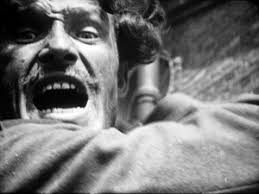
Thrillers typically use lots of close ups and extreme close ups of antagonists to enforce fear into the audience. Sometimes they also use close ups of the protagonists to convey their emotions clearly and allow the audience to see the fear in the character's eyes.
The location of thrillers is extremely significant. Often they'll be based in a city, with lots going on normally around the subject of the film to represent the extremity of the situation for the antagonist and protagonist compared to the ordinary life surrounding it.
The location of thrillers is extremely significant. Often they'll be based in a city, with lots going on normally around the subject of the film to represent the extremity of the situation for the antagonist and protagonist compared to the ordinary life surrounding it.
Thrillers are often based in quiet areas too, in small towns or villages on the outskirts of big cities. The small areas are often most powerful for thrillers due to the fact that it can be so unsuspecting. They're also typically dark areas at night without street lighting which enforces the chilling atmosphere for the audience.
Lighting is powerful in thrillers as it is normally fairly dark and shadowy. This means that the audience cannot see the whole image of what is going on so might not know what is about to happen. Shadows and darkness are effective in thrillers because as an audience you don't know what or who could be hiding in the darkness.

No comments:
Post a Comment